

Think Safety
• More than 145,000 people work in over 7,000 warehouses.
• The fatal injury rate for the warehousing industry is higher than the national average for all industries.
• Potential hazards for workers in warehousing:
• Unsafe use of forklifts;
• Improper stacking of products;
• Failure to use proper personal protective equipment;
• Failure to follow proper lockout/tagout procedures;
• Inadequate fire safety provisions; or
• Repetitive motion injuries.
Hazards & Solutions
Warehouse operations can present a wide variety of potential hazards for the worker. For warehousing establishments, the 10 OSHA standards most frequently included in the agency’s citations were:
1. Forklifts
2. Hazard communication
3. Electrical, wiring methods
4. Electrical, system design
5. Guarding floor & wall openings
and holes
6. Exits
7. Mechanical power transmission
8. Respiratory protection
9. Lockout/tagout
10. Portable fire extinguishers
Docks
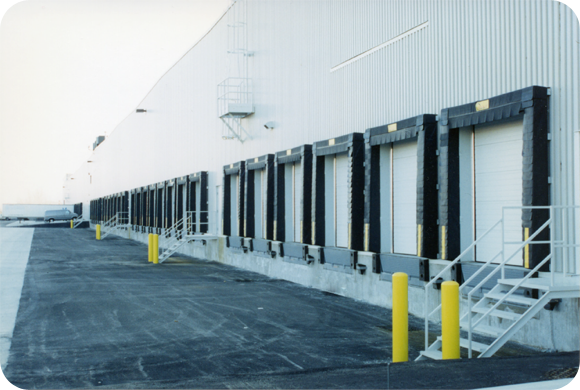
Hazard: Injuries happen here when forklifts run off the dock, products fall on employees or equipment strikes a person.
Solutions:
• Drive forklifts slowly on docks and dock plates;
• Secure dock plates and check to see if the plate can safely support the load;
• Keep clear of dock edges and never back up forklifts to the dock’s edge;
• Provide visual warnings near dock edges;
• Prohibit “dock jumping” by employees;
• Make sure that dock ladders and stairs meet OSHA specifications.
Forklifts
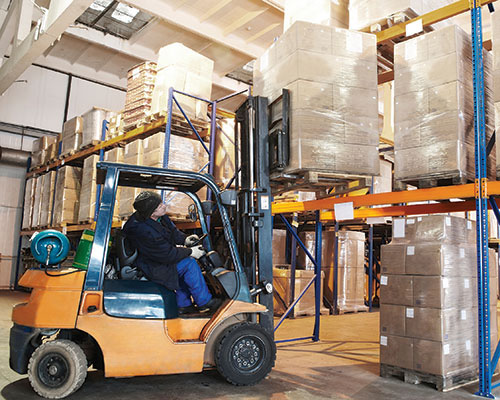
Hazard: About 100 employees are killed and 95,000 injured every year while operating forklifts in all industries. Forklift turnovers account for a significant percentage of these fatalities.
Solutions:
• Train, evaluate and certify all operators to ensure that they can operate forklifts safely;
• Do not allow anyone under 18 years old to operate a forklift;
• Properly maintain haulage equipment, including tires;
• Before using a forklift, examine it for hazardous conditions which would make it unsafe to operate;
• Follow safe procedures for picking up, putting down and stacking loads;
• Drive safely, never exceeding 5 mph and slow down in congested areas or those with slippery surfaces;
• Ensure that the operator wears a seatbelt installed by the manufacturer;
• Never drive up to a person standing in front of a fixed object such as a wall or stacked materials;
• Prohibit stunt driving and horseplay;
• Do not handle loads that are heavier than the weight capacity of the forklift;
• Remove unsafe or defective trucks from service until the defect is properly repaired;
• Maintain sufficiently safe clearances for aisles and at loading docks or passages where forklifts are used;
• Ensure adequate ventilation either by opened doors/windows or using a ventilation system to provide enough fresh air to keep concentrations of noxious gases from engine exhaust below acceptable limits;
• Provide covers and/or guardrails to protect workers from the hazards of open pits, tanks, vats and ditches;
• Train employees on the hazards associated with the combustion byproducts of forklift operation, such as carbon monoxide